
Road transport of dangerous goods is among the most delicate jobs in logistics. Even the smallest mistake can be costly. It is not only about money, but about human lives, environmental pollution and material damage. That is why the rules in this field are strict, and the work requires knowledge, experience and discipline. For the transport of dangerous goods by road, simply holding a permit is not enough. It is a complete system of rules that must function from the moment the goods leave the loading dock until they reach their destination.
Below we explain the key obligations, the measures you need to know, and the problems that companies and drivers face.
What road transport of dangerous goods involves
The basic idea behind all these regulations is to keep risk as low as possible. This is achieved through clear classification of goods, correct packaging and labeling, precise documentation, and training of the people who handle them.
How dangerous goods are classified
Under the ADR agreement, dangerous goods are divided into several classes. In road transport, the most common are:
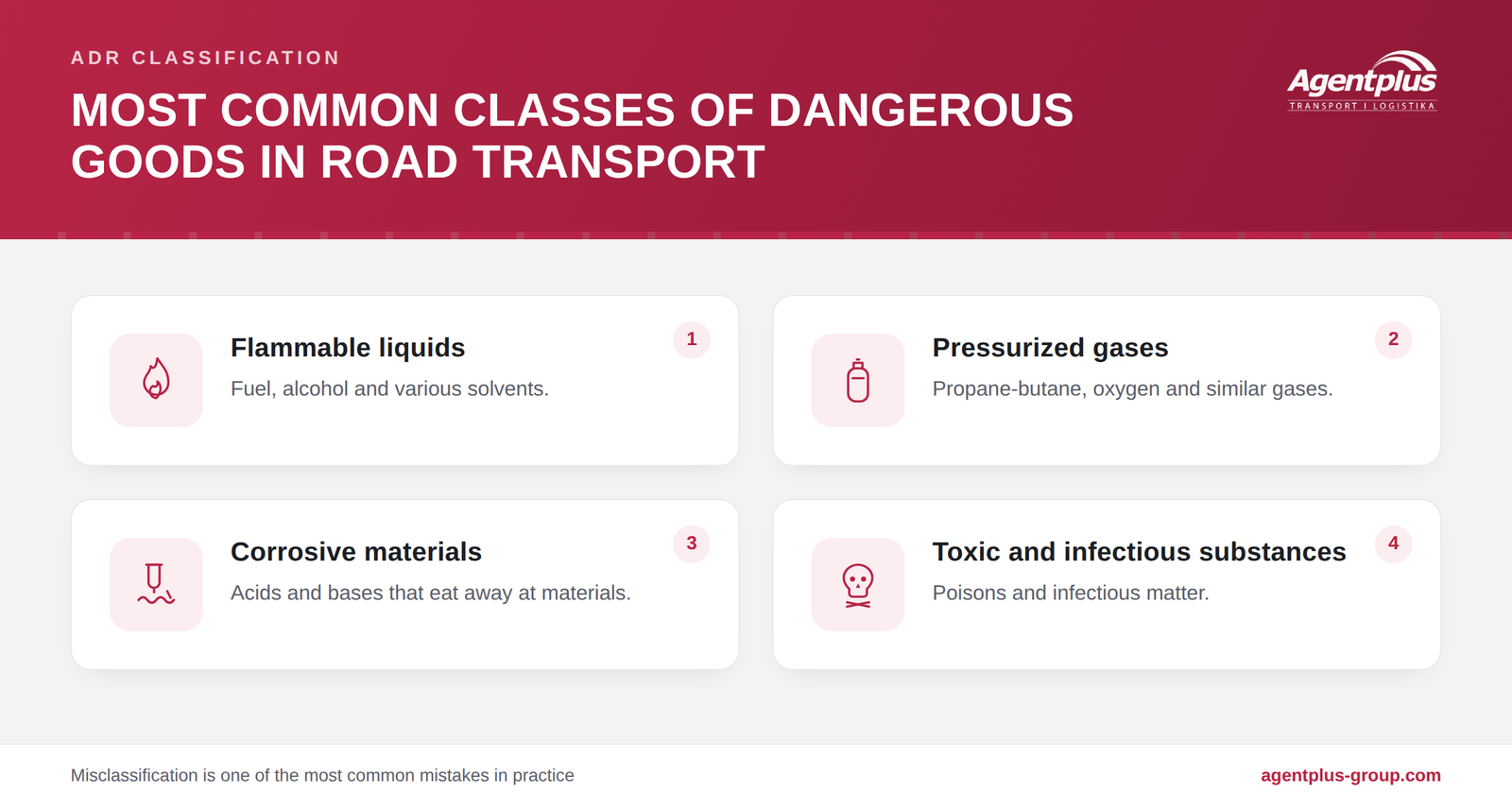
- Flammable liquids – fuel, alcohol, various solvents
- Pressurized gases – propane-butane, oxygen and similar
- Corrosive substances – acids and bases that corrode materials
- Toxic and infectious substances – poisons and infectious materials
Each of these classes requires a specific approach. One of the most common mistakes in practice is precisely the incorrect classification of goods. It later affects everything, from fines to a complete ban on transport.
Who is responsible for the transport of dangerous goods
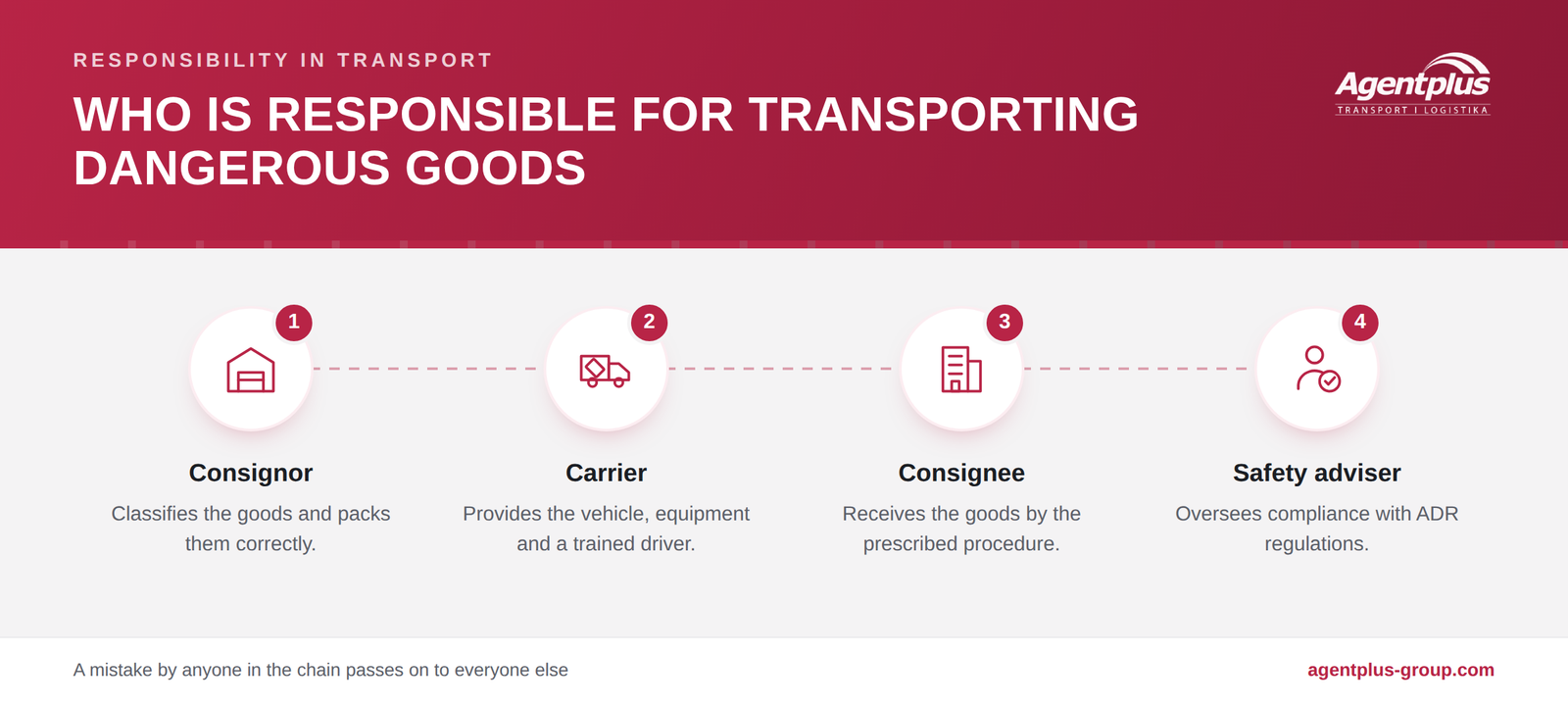
In Serbia, ADR regulations apply together with domestic laws. Responsibility does not rest on the driver alone, as many people think. The transport chain involves:
- the consignor of the goods
- the carrier
- the consignee
- the safety adviser for the road transport of dangerous goods
If any of them makes a mistake, the problem quickly spreads to everyone else.
What must be met for legal transport
For the road transport of dangerous goods to be both legal and safe, a series of clearly defined conditions must be met.
Vehicles must be adapted
Vehicles that transport dangerous goods are not ordinary. They must be technically matched to the type of cargo they carry. This includes:
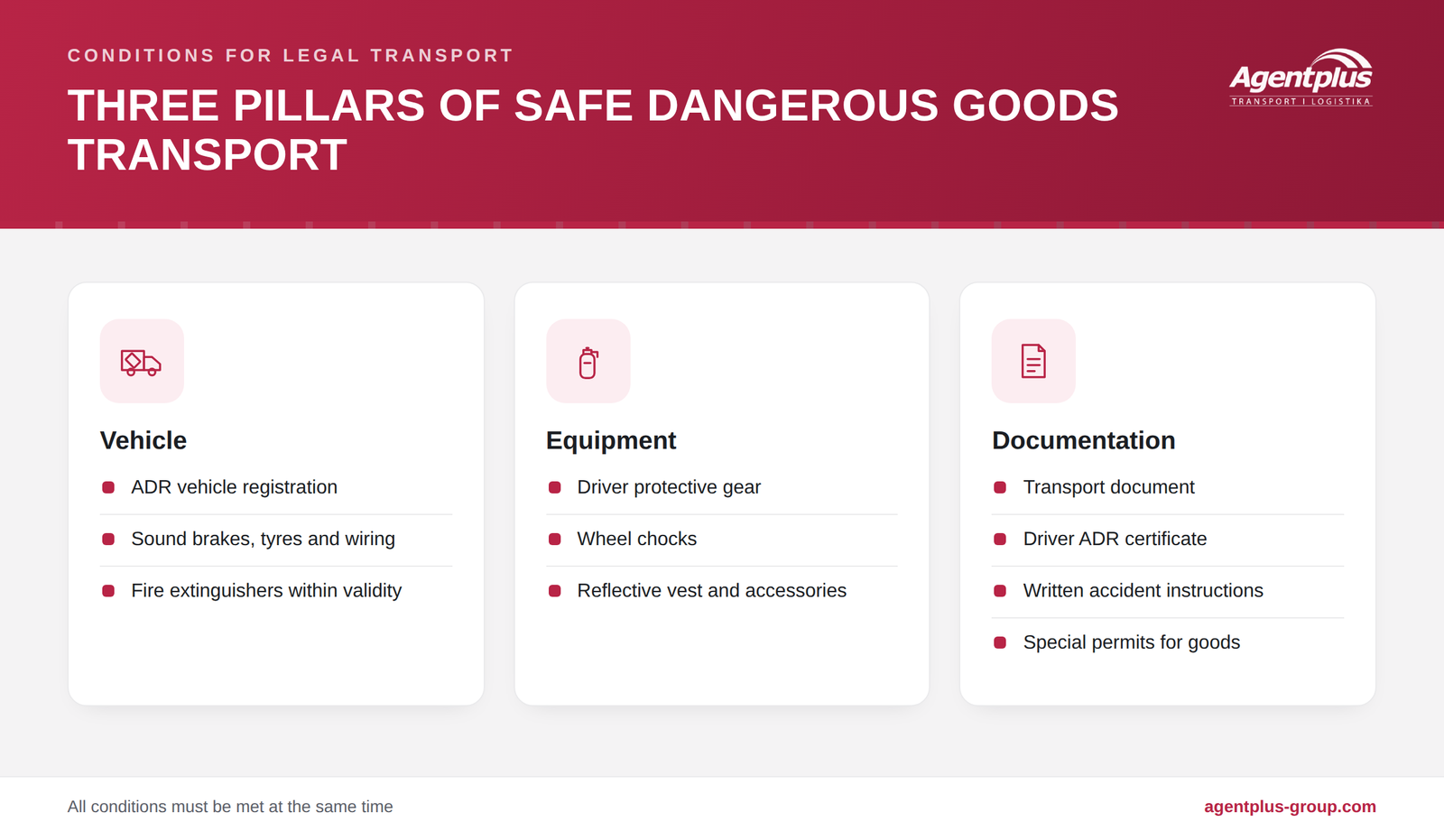
- a certificate that the vehicle is registered for ADR
- functional brakes, tires and the entire electrical system
- fire extinguishers of appropriate capacity and within their valid period
The problem arises when a vehicle formally meets the requirements, but its physical condition does not match the documentation. This is exactly what inspection checks.
Equipment that must be in the vehicle
The equipment that must be in the vehicle saves lives in a critical situation. It includes protective equipment for the driver, wheel chocks, a reflective vest, and written instructions on how to act in case of an incident.
The paperwork must be complete
For transport to be considered legal, the documentation must be complete. The following are most often required:
- the transport document
- the driver’s ADR certificate
- written instructions in case of an accident
- special permits for certain types of goods
A common mistake is to reuse old documentation for a new transport without checking whether it matches the cargo. This can be costly.
Why driver training matters
If the driver is not trained, the regulations mean nothing. The driver must understand exactly what they are transporting and how to react if something goes wrong.
ADR certificate
ADR training provides the basics, but real experience is gained in the field. Drivers who regularly handle the road transport of dangerous goods know that every type of cargo has its own specifics. The procedure for a corrosive liquid leak is completely different from that for a flammable substance.
What the driver must monitor during the trip
The driver is the first who must react in case of a problem. That is why it is important to:
- regularly check the cargo during the trip
- plan breaks carefully
- avoid high-risk sections of the road whenever possible
Packaging, labeling and handling
One of the most common causes of accidents is poor packaging, so the best prevention is to pay attention to the following:
Packaging must be tested
Packaging must be tested and labeled according to standard. Improvised solutions are prohibited, even for transport over a short distance.
Proper markings
The orange plates and hazard symbols are not there for appearance. They allow emergency services to know at a glance what they are dealing with and how to respond.
Careful loading and unloading
In practice, this is where most problems occur. If the cargo is not properly secured, it can shift during transit, damage the packaging and cause a leak or fire.
The mistakes people make most often
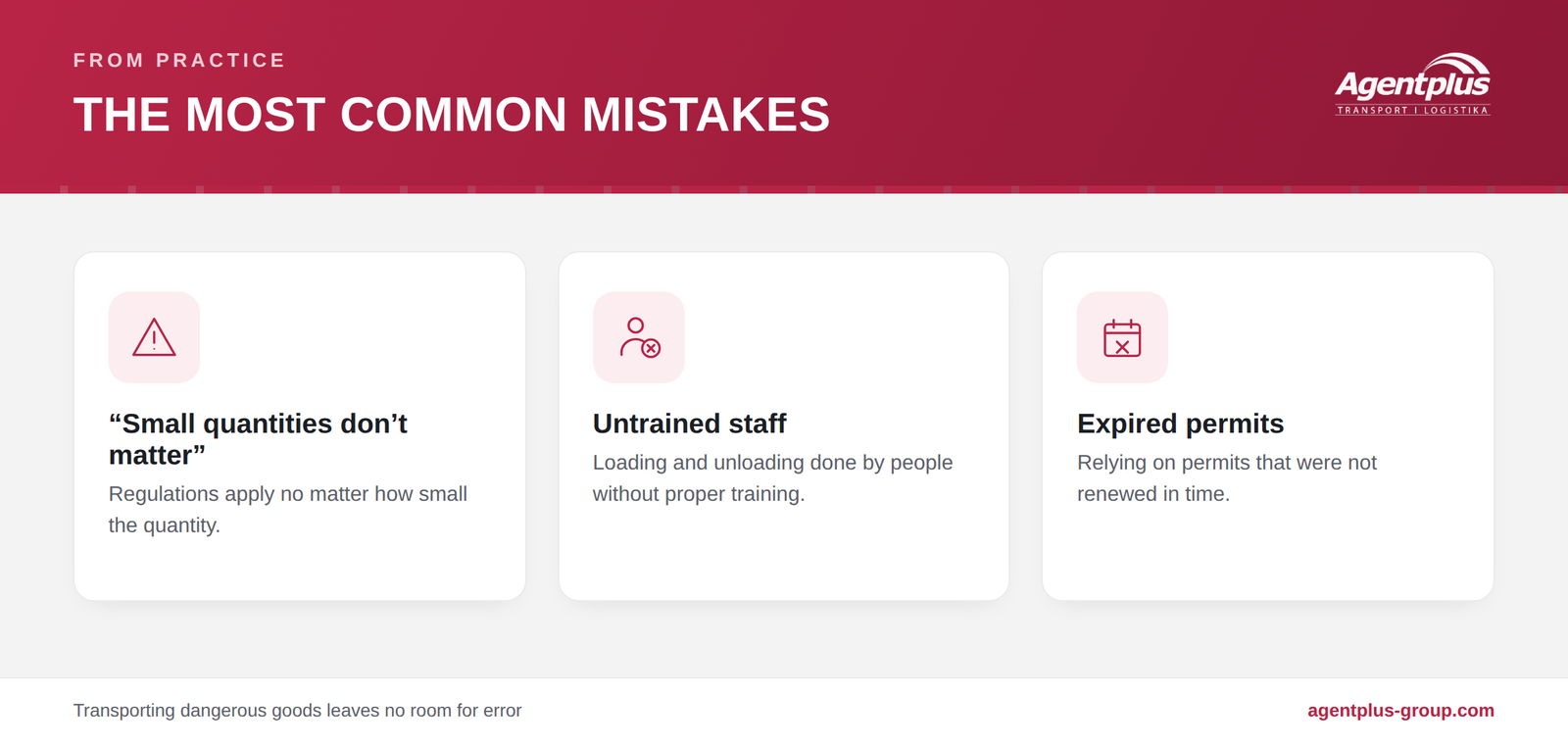
Experience from practice shows several mistakes that keep recurring:
- the belief that small quantities are less important
- using untrained staff for loading and unloading
- relying on old permits that were not renewed on time
The road transport of dangerous goods does not forgive mistakes, no matter how small the quantity.
A tip from practice
Serious companies in this business keep an internal record of “near misses.” These are situations in which no accident occurred, but it came close. By analyzing such cases, real problems can be prevented. This is not a legal obligation, but it is common practice among companies that last on the market.
The importance of a good logistics partner
A good logistics partner can significantly reduce risk. Cooperation with specialized companies and advisers, such as Agent Plus, often means faster document preparation, better organization and fewer delays in the field, along with a higher level of safety in handling dangerous goods.
Frequently asked questions
Is ADR required for every dangerous good?
Not always. There are exemptions for small quantities, but the conditions for them must be met precisely.
Who pays the fine if the documentation is not in order?
In practice, the fine can hit both the carrier and the consignor, depending on the nature of the violation.
How often is the ADR certificate renewed?
The certificate is renewed periodically, with a mandatory knowledge check.
Do foreign carriers follow the same rules?
Yes. ADR applies internationally, but local additions may exist.
Connect with our logistics team
Branch offices
AGENT PLUS SERBIA
- Adresa
- Makenzijeva 25, 11000 Beograd, Srbija
- Telefon
- Tel: +381 11 204 01 00
- E-mail: office@agp.rs
AGENT PLUS CROATIA
- Adresa
- Oreškovićeva 3, 10000 Zagreb, Hrvatska
- Telefon
- Tel: +38551312265
- E-mail: zagreb@agentplus.hr
AGENT PLUS MONTENEGRO
- Adresa
- Barskih logoraša 5b, 85000 Bar, Crna Gora
- Telefon
- Tel: +382 30 312 988
- E-mail: office@agentplus.me